

Friends
Welcome to our April edition in which we hear Pope Leo’s strong condemnation of imperialism.
We share a story from the Philippines YCW of their work with young women while the International YCS is launching an ecological project in Tanzania.
The Quebec JOC film Voir Juger Agir is continuing to attract attention in Canada.
We look ahead at what Pope Leo’s forthcoming encyclical on artificial intelligence might say.
We note that the YCS will also be celebrating its centenary in 2028 while Stefan Gigacz reminds us of the least read document from the Second Vatican Council, the Decree on Lay Apostolate, the one to which Cardijn contributed most directly.
We remember Fr Henri Caffarel, the French JOC chaplain, who has been declared Venerable.
And we share a new website of Cardijn Resources plus this week’s Gospel Reflection.
The Centre Cardijn International Team
Cross disrupts ‘imperialist occupation of world’: Pope Leo
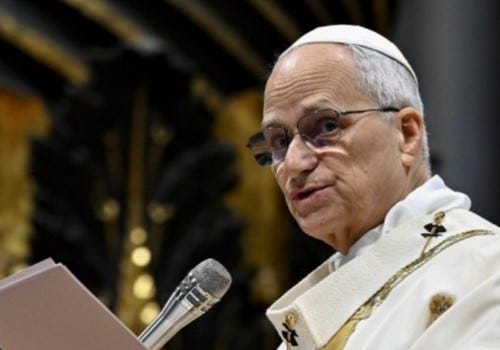
The Cross disrupts “imperialist occupation of the world from within,” Pope Leo said in a pointed comment during his homily for the Chrism Mass on Holy Thursday 2 April 2026.
“The violence that until now has been the law is unmasked,” he added. “The poor, imprisoned, rejected Messiah descends into the darkness of death, yet in so doing he brings a new creation to light.”
READ MORE
Cross disrupts ‘imperialist occupation of world’: Pope Leo

Women Rise Together in Community Empowerment Activity On 29 March, 2026, a group of young women and young mothers gathered in Barangay 6, Mercedes, Camarines Norte, Philippines, for a meaningful Women’s Empowerment and Gender Equality activity organized by the Philippine Young Christian Workers (PYCW).
The event brought together 25 participants with a shared goal of strengthening awareness, dignity, and unity among women in the community.
Through open discussions, participants shared real-life challenges they face—such as financial struggles due to insufficient family income, difficulties in raising children, and experiences of bullying that affect confidence and self-worth. These realities highlighted the need for stronger support systems and equal opportunities for women.
READ MORE
United Women, Empowered Futures: Advancing Gender Equality in the Community (IYCW Aspac)
IYCS partners with SJS EOA Farm Kilimanjaro Tanzania

The International Young Catholic Students IYCS has signed a Memorandum of Understanding with St Joseph Sustainable SJS Ecological Organic Agriculture EOA Farm Kilimanjaro Tanzania to promote ecological awareness and sustainable development among young people.
The agreement was represented by Roshan Melwyn Lobo Secretary General of IYCS and Fr Alwyn D Souza Director of SJS EOA Farm.
Inspired by Laudato Si, this partnership encourages young people to embrace care for creation by engaging in sustainable agriculture and agripreneurship while building a better future
SOURCE
IYCS-JECI (Facebook)
Changer les choses avec la méthode voir-juger-agir
What will Pope Leo’s expected encyclical say?
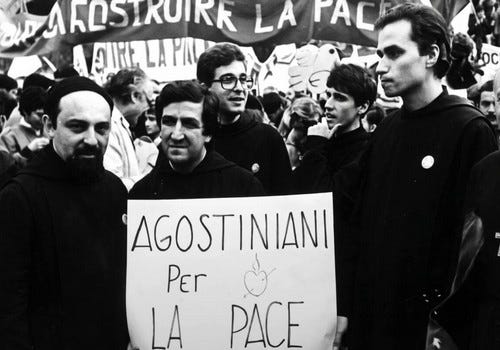
Commentators are expecting Pope Leo XIV’s first encyclical, probably on artificial intelligence, in the coming weeks, perhaps on 15 May, the anniversary of his predecessor Leo XIII’s landmark 1891 encyclical Rerum Novarum.
But how will he address the issue, asks Sally Scholz at Church Life Journal. “And what sort of message will he give to the world?”
“Since the mid-twentieth century, social encyclicals have employed a framing mechanism that often functions as a mantra among Catholics seeking to put CST into action: See, Judge, Act,” Scholz observes.
READ MORE
What will Pope Leo’s expected encyclical say? (See Judge Act)
YCS-JEC Centenary 1928-2028
On Thursday 17 May 1928, which was Ascension Day that year, leaders of the emerging Jeunesse Estudiantine Catholique (JEC) met to adopt their draft statutes. The same month, the Belgian bishops appointed Fr André Mignolet as national chaplain.
From 3-5 September that year, the new JEC held its first national study day at Bellevue College in the city of Dinant. At the same time, the Belgian bishops formally recognised the JEC and mandated it as an official Catholic Action movement.
The following year in 1929, a parallel movement for girls was launched called the Jeunesse Estudiantine Catholique Féminine or JECF – the Girls YCS.
READ MORE
YCS-JEC History (Joseph Cardijn Digital Library)
Apostolicam Actuositatem: Vatican II’s least read document
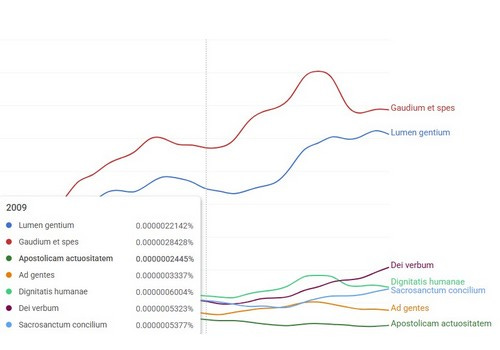
The final reports from the various Synodal Study Groups have now started to appear. So perhaps it’s time to look again at various issues that have been raised.
Thus, reading the final report of the Study Group on “To hear the cry of the poor and the earth,” I was struck – and heartened – to see the number of references – 92, in fact – to the need for “formation,” a theme that has recurred throughout the whole process of the Synod on Synodality as well as during the Australian Plenary Council.
READ MORE
Apostolicam Actuositatem: Vatican II’s least read document (Synodal Reflections)
Henri Caffarel’s new spirituality of marriage
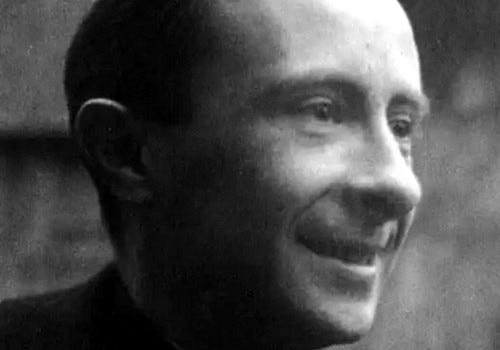
Pope Leo has approved a decree declaring venerable Henri Caffarel, a French YCW chaplain, who later founded the Teams of Our Lady movement, writes Stefan Gigacz.
During an audience with Cardinal Marcello Semeraro, prefect of the Dicastery for the Causes of Saints, on 23 March 2026, Pope Leo authorised the promulgation of a decree recognising “the heroic virtues of the Servant of God Henri Caffarel, diocesan priest, founder of the ‘Equipes Notre Dame’ (Teams of Our Lady) and the ‘Fraternité Notre-Dame de la Résurrection’ (Our Lady of the Resurrection Fraternity),” Vatican News reports.
He also began his priestly ministry as a YCW chaplain.
READ MORE
Venerable Henri Caffarel, YCW chaplain and founder of the Teams of Our Lady (Cardijn Research)
YCW chaplain Henri Caffarel declared venerable
Website: Cardijn study guide
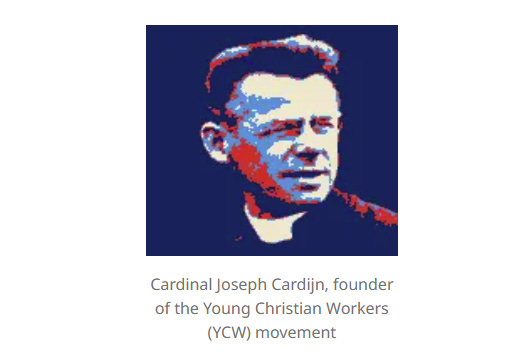
Cardijn Resources is a newly revamped website presenting several key Cardijn resources for leaders animators of YCW-inspired groups.
But if there’s one document above all to read, it’s surely his famous 1935 Three Truths article, which concisely summarises the whole Cardijn methodology under the headings of Truths of Faith, Experience and Pastoral Method.
The site also includes study guides for those who wish to go deeper.
READ MORE
Gospel: Life to the Full
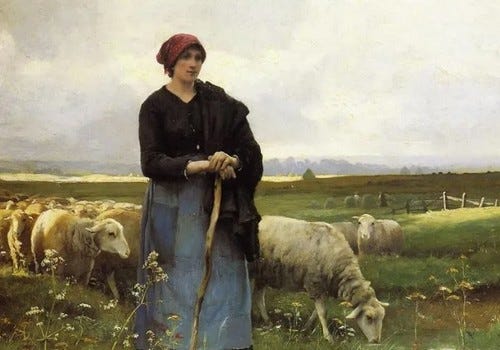
The references to shepherds and sheep in this week’s Sunday text is a continuation of a long used metaphor among the people of Israel that they are God’s flock and, most famously expressed in Psalm 23, that God is their shepherd. It was also common, in the Hebrew scriptures, for those exercising leadership in the community to be referred to as shepherds.
The burden of the shepherd’s responsibility is immense as the very life of the sheep is in their hands. The vitriol expressed towards the ‘false’ shepherds (thieves, brigands, strangers) is probably a carry-over from the conflict of the previous chapter where the Pharisees sought to undermine the miracle (sign) of the man whose sight had been restored.
This conflict is an important backdrop to this text as is contrasts the liberating, life giving action of Jesus with the restrictive, oppressive interjection of the Pharisees. Jesus’ has come so that humanity might live ‘life to the full’, an image presented in the metaphor of the sheep finding certain pasture and restated in the famous final verse of this text. ‘I have come so that they may have life and have it to the full.’ (John 10:10).
READ MORE
Gospel Enquiry: Life to the Full (Cardijn Reflections)
Join the Centre International Cardijn

Membership form here: